Woodworking Gift Guide 2026: Tools, Jigs and Shop Upgrades
Gifts for the woodworker in your life, sorted by who they are and how big a gift you have in mind: stocking stuffers, everyday tools, shop upgrades and the big ones. Every pick comes with a quick fit check, because the wrong blade or chuck is a frustrating gift.
Updated October 25, 2026 · WoodShopMachines.com editorial team
This guide is for anyone shopping for a woodworker: a partner setting up a first garage shop, a parent with a basement full of cast iron, a friend who turns bowls, or the person who seems to own every tool already. Use the recipient buttons to narrow the list, then read the Check first line on each card before you buy. Those lines cover the details that decide whether a gift fits: blade size, arbor, spindle thread, hose diameter and power.
If you can ask one question without spoiling the surprise, ask what machines they have and what model. Most of the fit problems below disappear once you know that.
Black Friday
Affiliate disclosure: WoodShopMachines.com may earn from qualifying purchases through Amazon Associates and eBay Partner Network at no extra cost to you. Product links are shopping paths, not evidence that a larger or more expensive machine is automatically the right choice.
Safety: Push sticks, hearing protection, eye protection and dust control are some of the best gifts on this list, but no gift makes a machine safe by itself. Guards, riving knives and the machine manual still come first. See the site's table saw safety page and wood dust health hazards for the wider picture.
Shopping for someone specific?
These companion guides go deeper on one kind of woodworker or one kind of purchase.
Small, useful and hard to get wrong. Most of these fit any shop, from a garage corner to a full machine room.
First shopMachine ownerSmall space
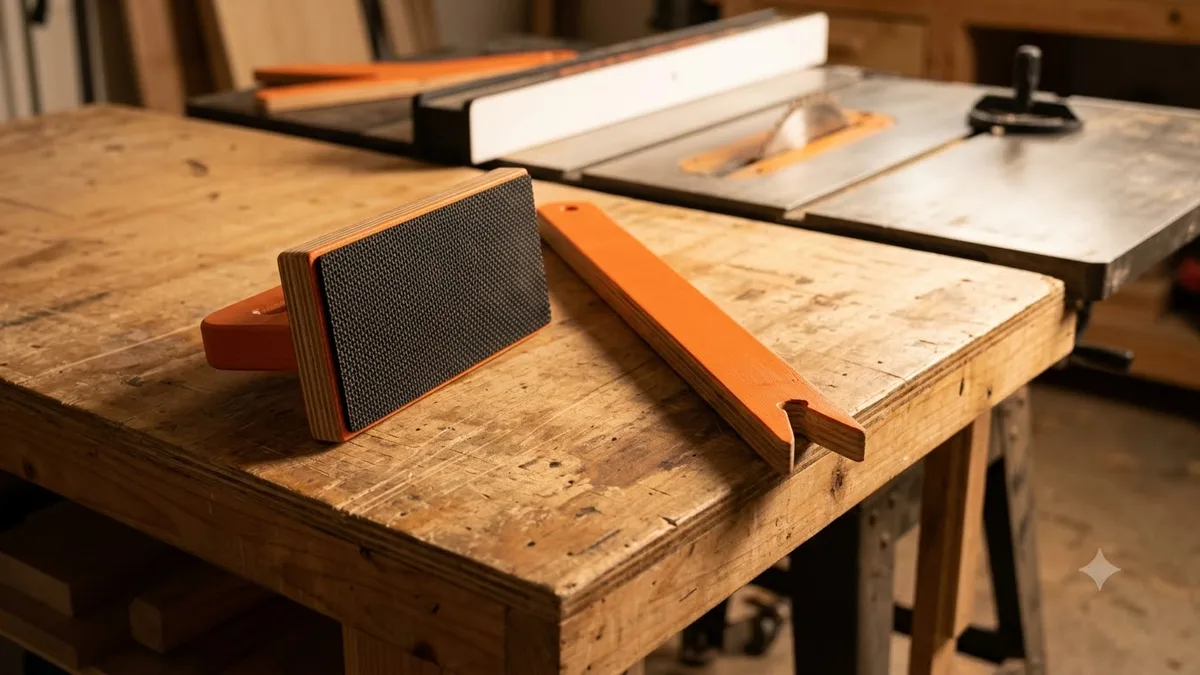
Bench Dog push block and a pair of push sticks
A push block with a grippy sole and a heel lets them hold a board down and drive it past a table saw blade, jointer cutterhead or router bit while their hands stay well back. They wear out and get nicked, so even an experienced woodworker can use a fresh set.
Check first: Push blocks are for feeding stock, not a replacement for the guard or riving knife. Pair a flat-soled block with a notched push stick for narrow rips.
A digital caliper settles questions a tape cannot: the true thickness of a board after planing, the diameter of a tenon on the lathe, the width of a saw kerf. It reads in inches and millimeters, which helps with metric hardware and imported parts.
Check first: It runs on a small coin battery; tuck a spare in the box.
This small digital gauge sits on a saw table, zeroes, then reads the tilt of the blade or the angle of a jointer fence. It is a quick way to set a 45-degree bevel without trusting the scale on the saw. A good pick for someone who seems to own every tool already.
Check first: The magnetic base needs a steel or cast-iron surface. On an aluminum table it will still read, but it will not hold on by itself.
Eye and ear protection is the gift most woodworkers under-buy. A couple of pairs of comfortable glasses marked ANSI Z87.1, a box of foam earplugs and, for a lathe user, a full face shield worn over the glasses cover the basics.
Check first: Ask whether they wear prescription glasses; over-the-glasses safety frames exist for that.
Solid gifts: measuring, hand tools and safer feeding
Tools they will use on almost every project. Each one is still worth a quick fit check before you order.
First shopHand toolsTurnerHas everything
Understanding Wood by R. Bruce Hoadley
Hoadley’s book explains why wood moves, cracks, cups and glues the way it does, from cell structure to moisture content. It is the reference many woodworkers keep coming back to, and it helps with every project, whether they use machines or hand tools.
Check first: Look for the revised edition. Used copies are easy to find and make a fine gift.
A combination square checks blade and fence settings, marks lines square and at 45 degrees, and sets depths. Starrett is the name machinists and woodworkers have trusted for generations, and a good one lasts a lifetime.
Check first: Starrett sells several grades and blade graduations. A 12-inch blade is the usual all-round shop size.
Woodpeckers, based in Strongsville, Ohio, makes precision squares and rules for setting up machines and laying out joinery. For the person with a well-equipped shop, a precision square is a gift they may not buy for themselves.
Check first: Some Woodpeckers tools are made in limited one-time runs, so a specific item may sell out. Their regular-line squares are the safer gift.
Narex chisels from the Czech Republic are a common first good set; Two Cherries from Germany are a step up. A small set of bench chisels handles paring, cleaning out joints and fitting hardware, and needs no power or floor space.
Check first: New chisels need their backs flattened and edges honed. If they do not sharpen yet, add a waterstone (see Shop upgrades).
Japanese saws cut on the pull stroke, which lets the blade stay thin and the cut stay fine. A ryoba has rip teeth on one edge and crosscut teeth on the other; a dozuki has a stiffened back for joinery like dovetails. Both are quiet and dust-light, which suits an apartment or a shared garage.
Check first: Ask which they would use more: general cutting (ryoba) or fine joinery (dozuki). Replacement blades are sold for many models.
Planers, routers and shop vacs are loud, and hearing loss from noise does not come back. Bluetooth hearing protection lets them listen to a podcast or take a call while the ears stay covered, which makes it more likely they actually wear it.
Check first: Check the NRR printed on the package and ask whether they want audio in the shop. Plain 3M Peltor earmuffs are the no-electronics option.
The GRR-RIPPER is an adjustable push block that holds a board down and against the fence while it feeds through the cut, with legs that can straddle the blade. Woodworkers who rip narrow strips on a table saw or work on a router table get the most from it.
Check first: Read the included instructions for setting it up on their saw, and keep the saw’s guard and riving knife in use as its manual directs.
Pocket holes are the fastest way for a new woodworker to build cabinets, shelves and face frames with a drill and some screws. The 720 clamps the board and sets itself to the material thickness, so there is less to adjust.
Check first: Compare the 720 and 720PRO box contents. Pocket screws in the right length for their stock are a useful add-on.
Shop upgrades: blades, sharpening, dust and clamps
Bigger-ticket gifts that make a shop work better. These need the most fit checking, so ask a question or two first.
Machine ownerHas everything
Forrest Woodworker II or Freud combination saw blade
A premium combination blade cuts cleaner rips and crosscuts than the blade that came with most saws. The Forrest Woodworker II is a long-standing favorite; Freud’s Premier Fusion and its Diablo line are other well-known paths.
Check first: Match the blade diameter (10-inch or 12-inch), the arbor hole and the kerf. The saw manual says which kerf works with its riving knife.
One stone with a medium side for sharpening and a fine side for polishing keeps chisels and plane irons working. For someone who already sharpens, a Shapton Kuromaku stone in a grit they are missing is the upgrade.
Check first: King stones are soaked before use; Shapton Kuromaku stones only need a splash of water. Every waterstone needs flattening over time, so a flattening plate is a good add-on.
A Dust Deputy sits between a shop vac and the tool and drops chips and heavier dust into a bucket before they reach the vac, so the filter clogs less often. For a small shop that runs on a shop vac, it is one of the most useful upgrades there is. The Dustopper, a bucket-lid separator, is a simpler alternative.
Check first: Check the hose diameter on their vac and tools, and whether the kit includes the bucket. Fine dust still needs a good filter on the vac.
Parallel-jaw clamps keep cabinet sides and panel glue-ups square under pressure. Woodworkers say you can never own enough clamps, and a matched pair of a sensible length is a welcome gift at any skill level.
Check first: Clamps are most useful in pairs. Ask what they build: a clamp that is too short is useless, and a very long one is awkward in a small shop.
A starter set with a spindle gouge, bowl gouge, skew chisel and parting tool covers most early turning. High-speed steel holds an edge well and can be sharpened many times. Carbide-insert tools are an alternative for someone who does not want to sharpen yet.
Check first: Ask whether they turn on a mini lathe or a full-size one, and whether they have a grinder and jig to sharpen gouges.
A four-jaw chuck grips bowl blanks and spindle work without screws or glue blocks, and makes it easy to remount a piece. For a turner who started on a faceplate, it opens up a lot of projects.
Check first: Match the lathe’s spindle thread (common sizes include 1 inch x 8 TPI, 3/4 inch x 16 TPI and M33 x 3.5). Many chucks use threaded inserts, so check the insert too.
Major purchases that change how a shop works. These are best as a joint decision or a group gift, never a surprise.
Has everythingMachine owner
Festool Domino DF 500 joiner
The Domino cuts mortises for Festool’s loose tenons, giving strong, aligned joints in cabinets, frames and furniture with a handheld tool. It is the kind of upgrade a serious furniture maker talks about for years before buying.
Check first: It uses Festool’s own tenons, so add an assortment. It works best connected to a dust extractor; check that their hose fits.
SawStop saws use a brake system designed to stop and drop the blade when it senses contact with skin. After the brake fires, the brake cartridge has to be replaced and the blade usually does too. The saw is still run with the guard, riving knife and push sticks like any other table saw. Models range from a jobsite saw to industrial cabinet saws.
Check first: Confirm space, outfeed room, delivery and power: some cabinet-saw motors need a 240V circuit. Already own one? A spare brake cartridge matched to their saw model and blade type (standard or dado) is a practical smaller gift.
A surprise machine. A table saw, jointer or planer needs floor space, the right circuit, outfeed room and a plan for getting it into the shop. Decide together instead.
Blades, inserts and parts bought without the model. A blade with the wrong arbor or a kerf the riving knife does not suit is not usable. Neither is a throat plate for a different saw.
Huge mixed router bit or drill bit sets. Big bargain sets fill a drawer with sizes nobody uses. A few good bits in the shank size their router takes are more useful; see router bits.
Paper nuisance masks sold as dust protection. For fine wood dust, look for a NIOSH-approved respirator instead. The respiratory protection page explains the difference.
Novelty gadget kits. Multi-tools and "woodworker gift sets" tend to be built around a gift box, not a shop. One good tool beats a box of mediocre ones.
Gift receipts and return windows
Return terms vary by seller and many retailers publish separate holiday return windows, so check the policy before you order, especially for heavy items and anything bought from a marketplace seller. Ask for a gift receipt, keep the packaging until the tool has been tried, and for eBay purchases read the listing's return terms, since some used items are sold without returns. The Black Friday checklist covers returns on heavy machines in more detail.
What is a good gift for a woodworker who already has everything?
Precision measuring tools, a premium saw blade matched to their saw, a sharpening stone in a grit they are missing, more clamps or a book like Understanding Wood. Consumables such as blades, bits and abrasives get used up, so even a full shop needs them.
Is a table saw blade a safe gift?
Yes, if you know the blade diameter, the arbor size and the kerf their saw and riving knife accept. Check the saw manual or ask, and keep the receipt in case it does not fit.
Should I buy a table saw or other big machine as a surprise?
No. Machines need floor space, outfeed room, the right power (some need 240V) and a plan for delivery. Make a big machine a joint decision, or give a card that says what you would like to put toward it.
What are good gifts for a woodturner?
Turning tools, a four-jaw chuck matched to the lathe spindle thread, a full face shield worn over safety glasses, a digital caliper and good sharpening gear. Ask about the lathe size first.
What can I give a woodworker with a small shop or apartment?
Hand tools such as a Japanese pull saw, chisels and a combination square, a pocket-hole jig, hearing protection and a cyclone separator for their shop vac. They are quiet, compact and do not need a 240V circuit.
Do push blocks and safety gear make woodworking safe?
They support safer habits, but no gift makes a machine safe on its own. Push sticks, hearing protection and eye protection work alongside the guard, riving knife and the machine manual, not instead of them.
How this list was put together
Picks are product types and long-running models from makers' current lines, chosen for how well they fit a typical home or small professional shop and for how easy they are to get right as a gift. No prices are listed because holiday prices change daily, and no capacities or ratings are quoted where they differ by model. Read the maker's instructions and your machine manual before using any new tool or accessory.