Affiliate disclosure: WoodShopMachines.com may earn from qualifying purchases through Amazon Associates and eBay Partner Network at no extra cost to you. Product links are shopping paths, not evidence that a larger or more expensive machine is automatically the right choice.
What kerf is and why it varies
Kerf is the narrow channel a saw leaves behind, and the term also covers the material lost as sawdust. A reference page gives the example that a 1/8-inch kerf turns an eight-foot board cut into one-foot sections into only seven pieces plus a short remainder. Kerf depends on blade width, tooth set, wobble in the cut and how much material the teeth pull out of the sides of the cut.
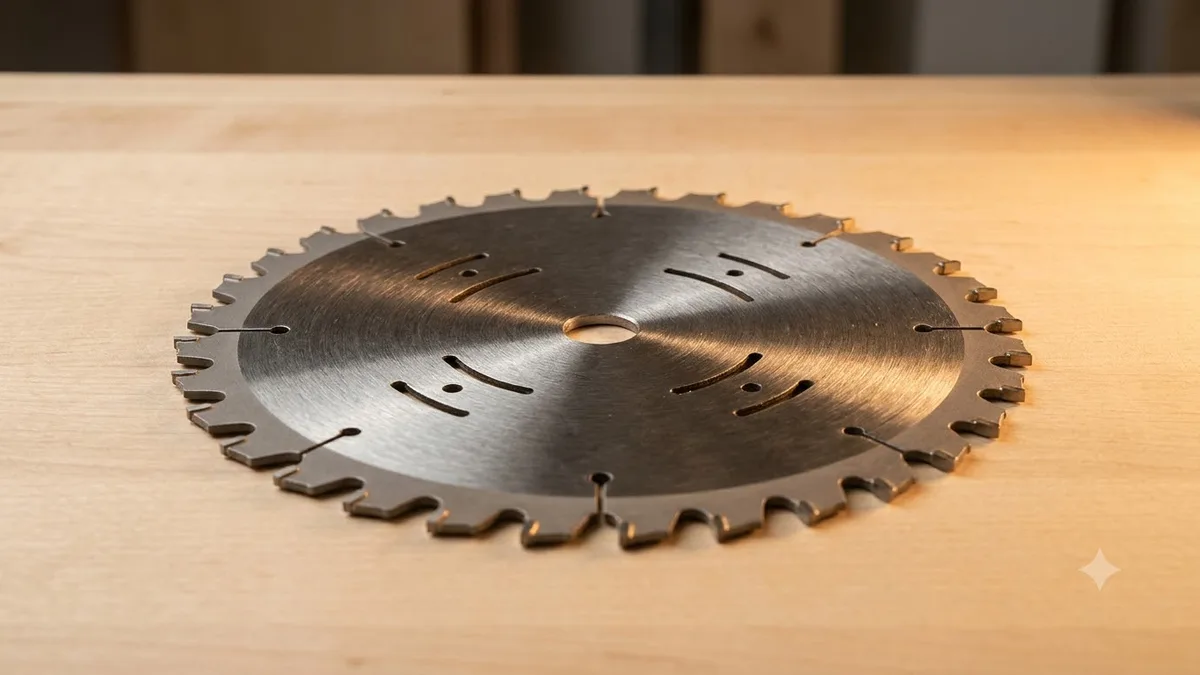
That is why a thin-kerf blade is attractive. It wastes less wood, which matters with costly hardwood, and it removes less material per inch of travel. The trade-off is a thinner plate. The same reference warns that a blade that is too thin can wobble, widening the kerf beyond what you expect. In practice, makers sell both thicknesses, and which is right depends on the saw and the cut.
No fixed width defines the two categories across all makers, so read the blade's stated kerf and plate thickness on the packaging or the maker's page instead of relying on the name. The site's page on table saw blades covers tooth styles, and rip blades and crosscut blades cover specialists.
The riving knife decides what you can run
A riving knife or splitter sits behind the blade and keeps the kerf open so the board does not pinch and kick back. It has to be thinner than the cut the blade makes. OSHA's rule for hand-fed circular ripsaws says the spreader must be thinner than the saw kerf and must stay in true alignment with the saw even when the saw or table is tilted. A blade with a narrower kerf leaves less room for the knife.
That is the fit question that most blade articles skip. If you move from a full-kerf to a thin-kerf blade, the knife that worked before may be too thick for the new cut. The manual or the maker's knife listing states the blade thickness range the knife was designed for. Follow it. If a thin-kerf blade is allowed, the saw maker may specify or sell a knife for it.
Never solve a fit problem by removing the knife. Read riving knives and splitters, riving knives, splitters and kickback prevention for the safe approach.
Riving knife for a table saw
Search by your saw's make and model, and compare the knife's stated blade thickness range with the blade you plan to use. Used knives turn up on eBay; check that the model matches exactly.
Motor power and feed rate
Less material to remove means less work per inch of cut, which is the usual argument for thin-kerf blades on lower-powered saws such as jobsite saws. That is reasoning, not a measured result, and the blade will not rescue an underpowered motor if you feed too fast. A full-kerf blade on a strong saw usually has power in reserve for thick hardwood.
Power depends on voltage and circuit as well as the motor. See 120V vs 240V woodshop machines for why a saw's electrical setup matters, and table saw size guide for how saws are classed. The site's pages on jobsite table saws, hybrid table saws and cabinet table saws show the usual ranges. Check the blade maker's guidance for your saw type; do not assume.
Feed rate matters more than the label. A dull blade, a loaded blade or too fast a feed burns the cut and loads the motor on any kerf. A sharp, clean blade at a steady feed lets either type work well.
Cut quality, plate stiffness and wood
Plate stiffness affects how straight a blade runs through thick or knotty wood. A stiffer plate resists deflection, which tends to help in thick, dense stock. A thin plate can flex or flutter when pushed. When a cut wanders, check the setup first: fence alignment, a sharp blade, a clean plate and a steady feed all come before the question of blade thickness.
For sheet goods and thin stock, a thin-kerf blade with the right tooth count works for many users, and the lower waste is a bonus. For ripping thick hardwood on a strong saw, many woodworkers prefer a full-kerf blade, but that is a preference, not a rule. If the work is joinery, a different blade altogether may be right; see best dado blade sets before you change the setup.
Waste matters most with costly wood. A thin kerf blade saves a sliver on every cut, and on a long rip of valuable stock that sliver is worth considering.
Thin-kerf table saw blade
Add your blade diameter and arbor size to the search, and compare the stated kerf with your riving knife's range before ordering.
Saws with a brake or sensing system
Some saws have a safety system that senses contact or stops the blade, and the saw maker may restrict which blades work. One maker's FAQ for its saws says standard steel blades with steel or carbide teeth can be used, that non-conductive blades or teeth should not be used, that coated teeth should be avoided because the coating may slow detection, and that blades with depth-limiting shoulders are not recommended. That is one maker's rule for its own saws, and yours may differ, so read your manual.
The same rule of thumb applies to everything else: when the manual lists a blade limit, it comes before cut quality or price. If you are not sure whether a blade suits your saw, ask the maker, and do not experiment with a blade type the manual prohibits.
How to choose
| Situation | Lean toward | Check first |
|---|---|---|
| Lower-powered saw, mostly sheet goods and thin stock | Thin kerf | Riving knife range, blade limits |
| Strong saw, thick hardwood ripping | Full kerf | Knife thickness, arbor |
| Costly hardwood, waste matters | Thin kerf | Plate flex in thick cuts |
| Saw with a brake or sensing system | Whatever the maker allows | Manual blade rules |
| Not sure what the knife allows | Stay with the original blade type | Manual, maker |
A blade is a consumable, so you can try one type and learn. Just do it within what the manual allows, and keep your first test cuts light. Keep a note of the blade you used, its stated kerf and how it cut; the site's machine blade and cutter inventory page shows a simple way to record it.
When in doubt, the safest choice is the blade type that came with the saw, sharpened or replaced like for like, until you have confirmed the knife and the manual allow a change.
Frequently asked questions
What is the difference between thin-kerf and full-kerf blades?
Kerf is the width of the cut. Thin-kerf blades cut a narrower slot and remove less wood; full-kerf blades have a thicker plate and cut a wider slot.
Do I need a different riving knife for a thin-kerf blade?
Possibly. The knife must stay in the kerf, so check the manual or the knife listing for the blade thickness range it is designed for.
Is thin kerf better for a lower-powered saw?
It removes less material, so the motor works less per inch, but feed rate and blade sharpness still matter. Check your manual and the blade maker's guidance.
Can any blade be used on a saw with a safety brake?
Not necessarily. The maker may restrict blades, such as non-conductive, coated or shouldered types. Read the manual before buying.
Does a thin-kerf blade wobble more?
A thinner plate can flex or wobble more in some cuts, which widens the kerf. A sharp, clean blade and correct setup reduce the risk.
Sources and verification
- 29 CFR 1910.213 (eCFR), for the requirement that a spreader on a hand-fed circular ripsaw be thinner than the saw kerf and stay in alignment when the saw or table is tilted.
- SawStop FAQ: blade and dado compatibility, for one maker's blade rules for saws with a sensing system.
- Wikipedia: Kerf (a general reference), for the definition of kerf, material loss and the warning that a too-thin blade can wobble.
No kerf widths, plate thicknesses or power requirements are quoted. The relationship between kerf and motor load is explained as reasoning, not a measurement. Confirm blade diameter, arbor, riving knife range and any blade limits in your saw's manual and the blade maker's specifications.