Affiliate disclosure: WoodShopMachines.com may earn from qualifying purchases through Amazon Associates and eBay Partner Network at no extra cost to you. Product links are shopping paths, not evidence that a larger or more expensive machine is automatically the right choice.
Drift, tracking and wander are not the same thing
People use these words loosely, and mixing them up sends you to the wrong fix. Tracking is where the blade sits on the wheels: whether it stays centered on the tires and does not creep toward the edge or off. Drift, in the common shop sense, is when a blade that is tracking properly still pulls the cut to one side instead of straight along your line or fence. Wander is a general term for a cut that curves or runs out of line for any reason.
The distinction matters because the causes differ. A general reference page on band saws stresses that tracking matters for accurate cuts and for reducing blade breakage, and that the blade needs to be properly tensioned before you check tracking. It does not use the word drift, so the rest of this guide is practical shop sense and the checks your manual describes, not a measured result.
Before you check anything, make a few cuts in the same offcut and note what happens. A cut that curves one way every time points to the saw's setup or the blade's teeth. A cut that wanders a different way each time points to tension, guides or feeding. If you are buying blades for resawing, see the site's resawing blade roundup once the saw is set up properly.
Start with the blade, but look closely
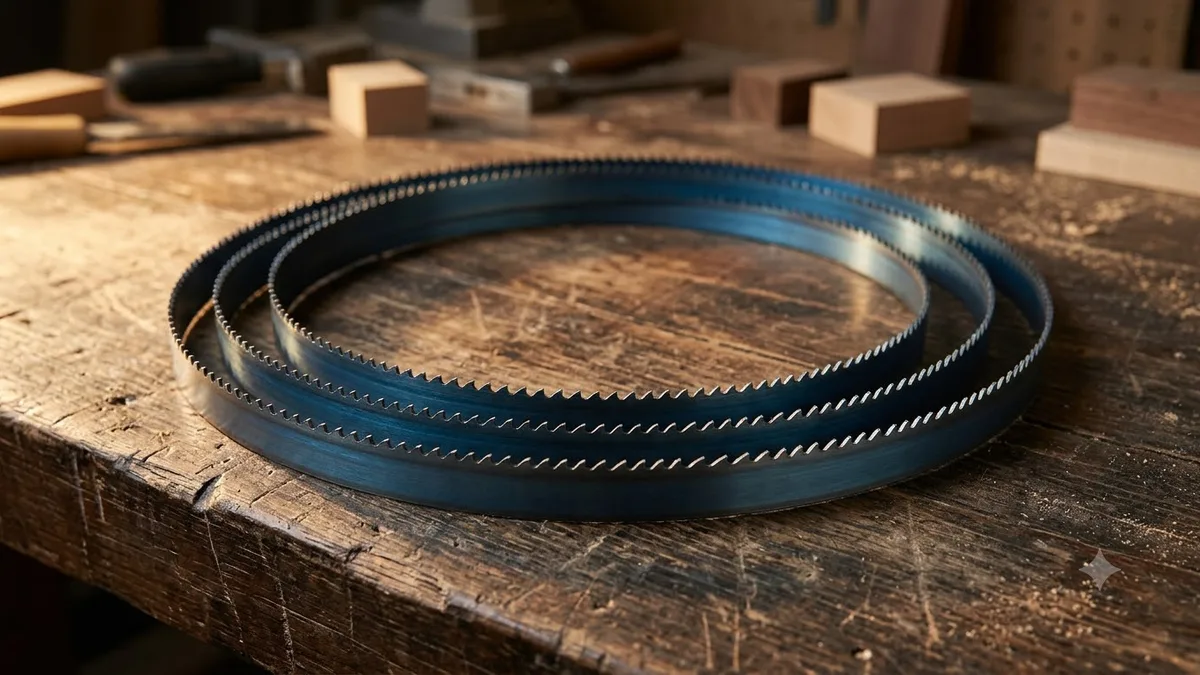
A dull blade is the usual suspect, and it deserves a real check. With the saw unplugged and the blade guard in place, look along the teeth with a good light and check for missing, rounded or chipped teeth, a blade with a crack or kink, and pitch buildup. Check that the blade is the right width and tooth style for the cut. A narrow blade used for a wide, straight cut is more likely to wander than a wider one meant for the job.
Tooth set is another point worth knowing. The reference page mentions that repeated sharpening narrows a blade and can leave the teeth catching the front edges of the guide rollers, which pushes the blade out of alignment. Uneven wear on the two sides of the teeth can also pull a cut sideways. If the blade is plainly worn out, replace it, and if it is only dirty, clean it and try again before you spend.
New blades can drift too, since a blade that is badly welded or damaged in a coil will not run true. If a fresh blade of the right type behaves the same way as the old one, the cause is almost certainly the saw. The site's band saw blades page explains tooth styles and widths.
Band saw blade for your saw
Search the blade length and width listed in your manual, plus the tooth style for the work. Do not guess the length from the wheel size; use the manual or the blade you are replacing.
Tension, tracking and wheels
Tension comes before tracking. The reference page says to tension the blade properly before checking tracking, because a loose blade tracks differently and can wander in the cut. Use the tension scale or method in your manual for the blade width you have installed. Over-tensioning is a risk too, because extra tension loads the blade and bearings, so avoid cranking it up as a cure.
For tracking, the page describes checking that the two wheels are in the same plane using a straightedge, then rotating the wheels by hand with the blade tensioned and watching where the blade sits. If the blade will not stay where it should, the wheels may be out of line, a bearing may be worn or a tracking adjustment may be seized. Follow the manual's steps and change one thing at a time.
Worn wheel bearings or a bent wheel shaft can cause trouble that no blade change will fix. If you hear roughness when you spin the wheels by hand, or feel play, that is a repair or a reason to bring in a technician. The used band saw inspection page lists what to check on any saw you are unsure about, and the technician guide covers when to stop adjusting.
Tires: the part people forget
The rubber or urethane tires on the wheels carry the blade. When they are worn, glazed, cracked or uneven, the blade can sit unevenly, track poorly or pick up pitch and debris. Look at the tire surface with the saw unplugged. Check for ridges, flat spots, grooves where the blade has worn in and any place where the tire has lifted from the wheel.
If the tires are worn, replacement is a normal maintenance job and often fixes tracking problems that blade swaps never will. Match the tire to your wheel size and style, and follow the manual for installation. The site's band saw tires page covers what to look for, and buying by your model number is safer than buying by wheel diameter alone.
Band saw tires
Search your saw model plus tire size, and compare the listing with your manual or parts diagram. Check whether the listing is for a pair, and that the profile suits your wheels. Used saws sold for parts can also be a source on eBay.
Guides, thrust bearing and the fence
The guides keep the blade from twisting and drifting under load. Above and below the table there are side guides, either blocks or bearings, and a thrust bearing behind the blade. The reference page mentions leaving a small gap between the back of the blade and the guide flange when setting roller guides, but the clearances that apply to your saw are in its manual, so use those.
Common problems are guides set too far from the blade, blocks worn into a groove, bearings that no longer spin, and an upper guide left high above the work. Reset them with the saw unplugged and the blade centered, then recheck by hand. Worn guides are a cheap fix and often the actual cause. The band saw guide bearings and blocks roundup and the guide bearings page cover the options.
If the blade is sound and set up properly but still pulls the cut slightly to one side, some woodworkers set the fence at an angle to match the way the blade cuts. That is a workaround, not a repair, and it is only worth using once tension, tracking, tires and guides are correct. The resaw fence roundup shows how fences are built to handle it.
Band saw guide blocks and bearings
Match the guide set to your saw model and blade width range. Many saws use proprietary guides, so compare the listing with the parts diagram, not just the picture.
The order of checks
- Unplug the saw and inspect the blade for damage, dullness and pitch.
- Set tension to the manual for the blade width.
- Check tracking with the wheels turned by hand.
- Inspect the tires and replace them if they are worn.
- Reset guides and the thrust bearing to the manual's clearance.
- Make a test cut in scrap, and only then consider a new blade or a fence workaround.
Keep notes on what you changed and what happened. If you are shopping for a saw rather than fixing one, the band saw size guide and benchtop versus 14-inch bandsaw help you pick a machine whose parts you can replace.
Frequently asked questions
Why does my bandsaw cut curve to one side?
Common causes are a dull or damaged blade, worn tires, incorrect tension, poor guide setup or a tracking problem. Check them in order before buying a blade.
Is drift the same as tracking?
No. Tracking is where the blade sits on the wheels. Drift is a blade that tracks properly but still pulls the cut off the line. They have different causes.
Can worn tires cause drift?
They can cause tracking and blade-running problems that look like drift. Worn or uneven tires are a normal wear item and worth checking.
Do I need to tension the blade before checking tracking?
Yes, according to a general reference on band saws. Use your manual for the tension method and blade width.
When should I replace the blade?
When it is dull, damaged, loaded with pitch you cannot clean off or the wrong type for the work. A new blade will not fix tires, guide or tracking faults.
Sources and verification
- Wikipedia: Band saw (a general reference), for the notes on checking that the wheels are in the same plane, tensioning the blade before checking tracking, the small gap behind the blade when setting roller guides and the effect of a narrowed, repeatedly sharpened blade on guide rollers.
No tension values, clearances, tire sizes or blade lengths are quoted, apart from what the reference page describes for its example. The meaning of drift and the order of checks are practical shop guidance. Confirm every setting in your saw's manual or the maker's support page.