Affiliate disclosure: WoodShopMachines.com may earn from qualifying purchases through Amazon Associates and eBay Partner Network at no extra cost to you. Product links are shopping paths, not evidence that a larger or more expensive machine is automatically the right choice.
What square and parallel mean for a rip fence
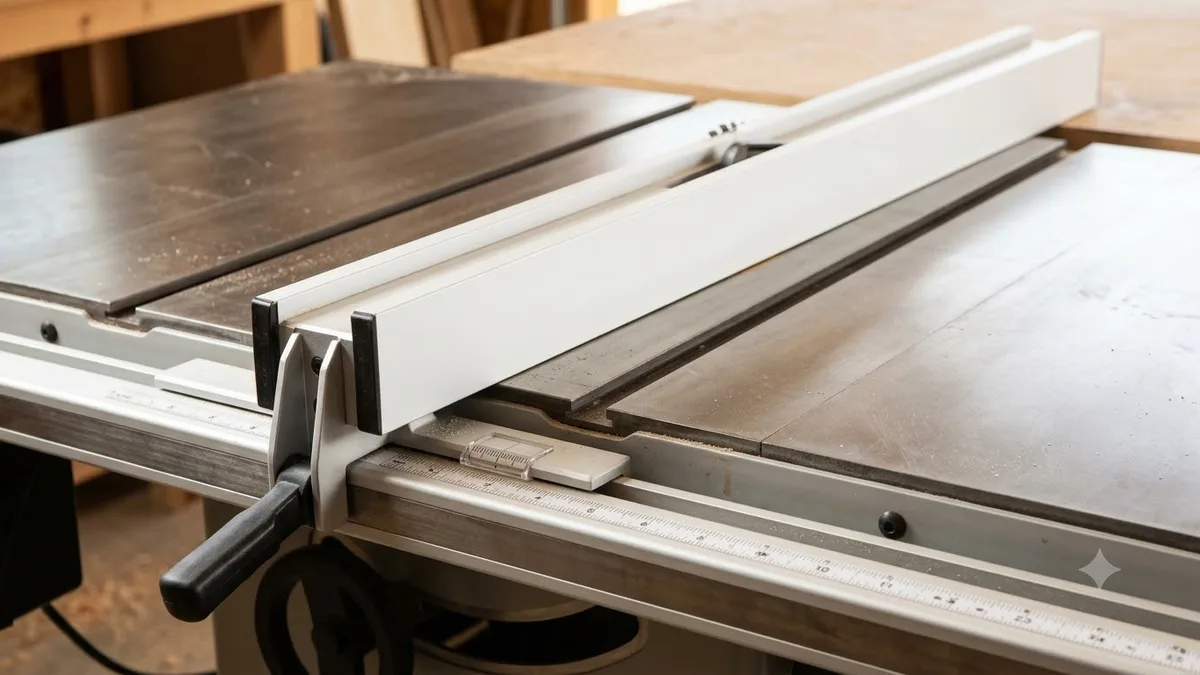
The fence has to do two jobs. Its face must stay parallel to the blade, which is usually measured against the miter slot because the slot is machined parallel to the blade. And its face must stay square to the table so the board rides flat against it. When people say the fence will not stay square, they usually mean the first problem: the back end drifts toward or away from the blade after the lock is pushed down.
Why this matters is simple. If the back of the fence leans in toward the blade, the board can be pinched between the blade and the fence. A general reference on table saws describes kickback as a piece pinching the blade or turning against it and being thrown back toward the operator. That is the reason saw makers publish alignment steps and the reason to fix a drifting fence before it becomes habit.
Most fences read as square at the front because the lock bears there. What your saw's maker wants for the fence-to-blade relationship is in the manual, so do not copy a setting from someone else's saw.
Diagnose the drift before buying anything
Unplug the saw and run through these checks in order. Each one is cheap, and any of them can explain a fence that will not hold.
| Symptom | Likely cause | First fix |
|---|---|---|
| Fence is parallel when set, off after locking | Worn or dirty locking pad, clamp not seating | Clean contact surfaces, inspect pad and clamp parts |
| Fence slides roughly or sticks | Pitch, dust or rust on the rail | Clean the rail, wax lightly per the manual |
| Fence rocks or flexes at the far end | Loose rail bolts or a bent rail | Tighten the rail mounts, check rail straightness |
| Fence is off by a different amount each time | Play in the head or worn guide surfaces | Compare the fence head to the rail; replace worn parts |
| Fence face is not square to the table | Bent fence body or worn face | Check the face with a square; replace the face or fence |
Look at the saw as well as the fence. Rust or burrs on the table edge or the rails can stop the head from seating, and a table that has been moved can leave the miter slot and rails no longer lined up. The site's cast-iron rust post covers keeping the surfaces clean, and the fence alignment inspection page lists what to look for on a used saw.
Fixes that cost little
Start with cleaning. Wipe the rails, the fence head and the face with a clean cloth, and remove pitch, dust and any loose rust. A fence rides on a few small contact areas, so a film of grime can change where it seats. Use only the lubricant or wax your manual names, and keep it off the locking surfaces unless the manual says otherwise.
Next, check the mechanical parts. Look at the locking pad or pads for wear, and at the clamp lever and cam for play. Check the rail bolts for tightness, with the saw unplugged. Many fence systems have an adjustment for the clamp pressure and for the front and rear alignment. The manual shows where and how far to adjust, and it is better to change one adjustment and recheck than to turn several at once.
Parts are often cheaper than a new fence. Search for your saw's model number and the part name, and use the parts diagram to confirm the part number. Used and surplus parts are common on eBay, but check that the listing names your model, because fence parts are rarely interchangeable across brands. The rip fences parts page lists what usually wears.
Replacement fence pads, clamps and rail parts
Search by your saw model plus the part name, and match the number to your parts diagram before ordering. Used parts are fine for rails and housings, but check the listing photos for wear and damage.
When replacement makes sense
Replace the fence when repair costs approach the price of a better fence, or when the fence is the cause no matter how it is adjusted. A bent body, damaged rails, an unavailable part or a fence with no adjustment left are good reasons. An older saw that is otherwise solid can gain a lot from a new fence, since fence quality is a large part of how a saw feels in use.
Fit decides everything. Aftermarket fences come in different rail lengths and mount to the table in different ways, and some need drilling or a specific table edge shape. Do not assume a fence fits because the saw is the same size. Read the listing's stated fit and the rail and table requirements, and measure your saw's table edge and mounting area before you order. The maker's spec sheet or support page is the place to confirm a fit, not a seller's title.
- Repair: best when the fence is sound and only a pad, clamp or fastener is worn.
- Aftermarket fence: best when the saw is good but the fence is weak, and you have confirmed fit and mounting.
- New or better saw: best when the table, trunnions or motor also fall short. The table saw size guide and cabinet saw versus contractor saw guide help you decide.
If you are comparing used saws, a loose or rubbery fence on a listing is worth a question, since it may be a small repair or a sign of wider wear. See the five missing photos in most table saw listings for what to ask the seller to show.
Aftermarket table saw rip fence
Compare the rail length, mounting method and stated saw compatibility with your own saw before ordering. A used fence system can be a good value on eBay when the listing shows the full fence, rails and mounting hardware.
Setting the fence once it holds
After repairs, set the fence again using the steps in the manual. Most manuals describe measuring from a miter slot to the fence at the front and rear of the blade, using the same point on the blade each time. Lock the fence, measure, adjust and lock again. Do it several times in different positions so you know it holds across the table.
Then make a test cut on scrap and look for burn marks, a board that tries to pull away from the fence and a cut that drifts. A small, steady error is easier to live with than a fence that moves. After that, keep the rails clean and check the fence at the start of each project. The router table fence roundup shows how much a sound fence matters on other machines too.
If the saw's table or miter slot itself is the problem, a technician or the maker is the right call. The site's page on when to hire a machinery technician covers where adjustment ends and repair begins.
Frequently asked questions
Why does my table saw fence move when I lock it?
A worn locking pad, a dirty contact surface, a loose rail or play in the clamp can each shift the fence as the lock goes down. Clean first, then inspect the pad, clamp and rail bolts.
How do I check if my rip fence is parallel to the blade?
Most manuals compare the distance from the miter slot to the fence at the front and rear of the blade. Follow your saw manual for the exact points and tolerance.
Can a fence slightly out of parallel be dangerous?
It can be. A fence that closes in behind the blade can pinch the board and contribute to kickback. Align it per the manual before ripping.
Will any aftermarket fence fit my saw?
No. Rail length, mounting holes and table edge shape vary. Check the stated compatibility and measure your saw before buying.
Is it worth repairing an old fence?
Often yes if only a pad, clamp or fastener is worn and parts are available. Replace the fence when the body or rails are bent or no adjustment remains.
Sources and verification
- Wikipedia: Table saw (a general reference), for the description of kickback as a piece pinching the blade or turning against it and being thrown back at the operator.
- Table Saw Safety and Operation, a university wood lab's operating sheet, for the practice of keeping the guard, splitter and kickback devices working before cutting and keeping stock tight to the fence.
No alignment tolerances, adjustment amounts, rail lengths or part compatibility are quoted. Fence design and alignment steps differ between saws, so confirm them in your manual or with the maker, and have a qualified technician look at a table or miter slot that is damaged.